

Cantón Sucre, Manabí, Ecuador
Cantón Sucre is located on the central coast of Manabí, Ecuador, where the Río Chone meets the Pacific Ocean. The canton has around 60,000 residents and covers approximately 764 square kilometers. Its cantonal capital is Bahía de Caráquez, a coastal city known for its beaches, estuary, mangroves, seafood, and relaxed atmosphere.
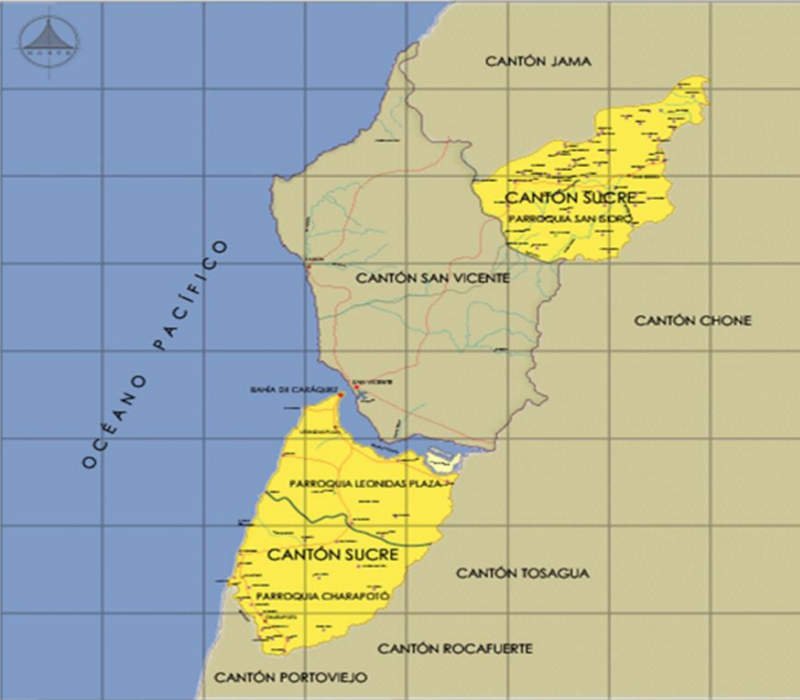
The canton is divided into four parishes:
- Bahía de Caráquez – the cantonal capital and the main coastal and commercial center.
- Leónidas Plaza – directly next to Bahía de Caráquez and an important residential, commercial, educational, and transportation area.
- Charapotó – a rural parish with a strong agricultural and cultural identity and an important pre-Columbian history.
- San Isidro – a large rural parish known for agriculture, livestock, and its rural communities.
Together, these four parishes give Sucre a unique combination of coastal cities, beaches, rivers, mangroves, agriculture, rural communities, history, and tourism.
Things to See and Do
There is much more to Cantón Sucre than simply the beaches of Bahía. Visitors can enjoy the beaches and waterfront of Bahía de Caráquez, walk along the malecón, explore the Chone River estuary, and take boat trips through the mangroves of Isla Corazón. The calm waters of the estuary also provide opportunities for kayaking, boating, and other water activities.
The area is also known for its seafood and traditional Manabí cuisine, with fresh fish, shrimp, crab, ceviche, and other local dishes playing an important part in the local culture and economy. Agriculture, fishing, shrimp farming, livestock, commerce, and tourism are all important parts of the canton.
For visitors interested in history and culture, Sucre has an especially interesting past. The canton was home to important pre-Columbian cultures, including the Caras in the Bahía area, the Muchique culture around San Isidro, and the ancient settlement of Japotó in the Charapotó area. The ruins of Japotó are considered an important archaeological site.
One of Sucre’s greatest strengths is its variety. Within one canton, you can go from a Pacific beach to a river estuary, from mangrove forests to agricultural communities, and from a modern coastal city to archaeological sites that are hundreds of years old.
That combination gives Cantón Sucre enormous potential for tourism, investment, recreation, agriculture, education, and economic development while still maintaining the character and culture that make Manabí unique.