

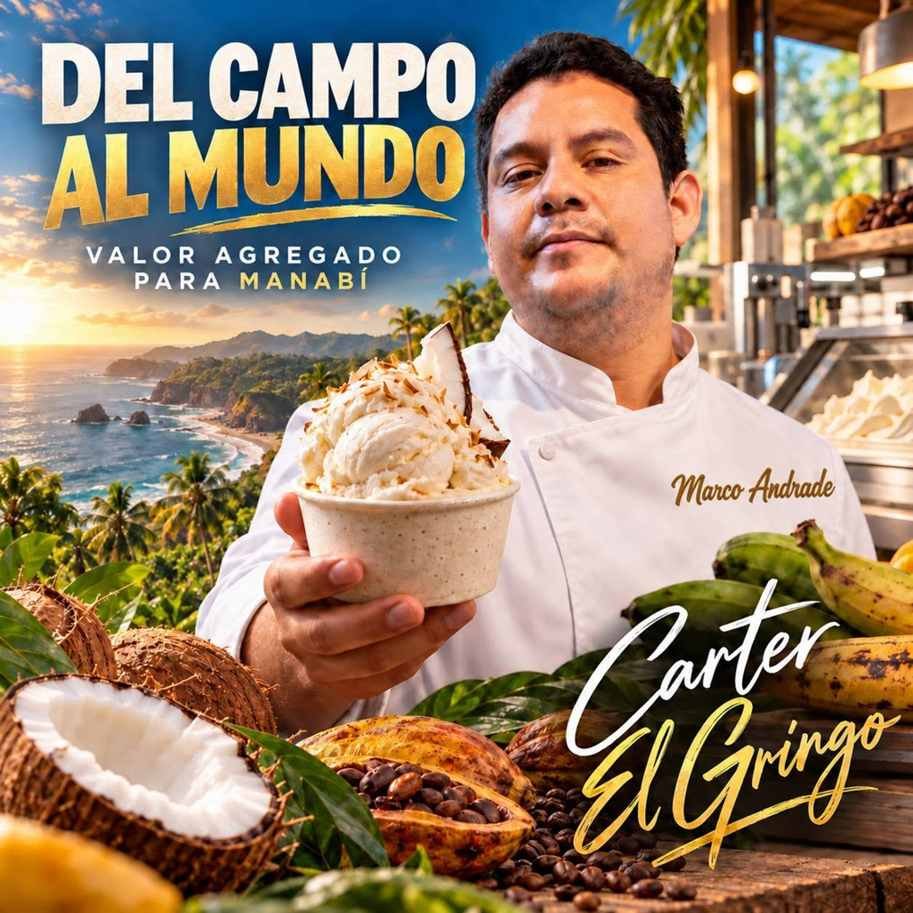
Manabí coconut gelato helped Marco Andrade, the Portoviejo entrepreneur behind Pop2Go, win the Copa Latam Bajo Cero 2026. Made with coconut, vanilla, and cashew, his creation turned an ingredient from our province into an internationally recognized product.
This is the kind of story I love.
Because behind the award is something much bigger than a good scoop of gelato. It shows what can happen when we combine local ingredients with knowledge, creativity, and a brand of our own.
Manabí already has the ingredients. The question is how much more we could achieve by processing, packaging, and marketing more of them right here.
Marco Andrade and Pop2Go: A Win for Manabí’s Food Industry
Marco Andrade won first place at the Copa Latam Bajo Cero 2026 in Santiago, Chile. His entry, Del territorio al gelato, was a dairy-free creation made with Ecuadorian coconut, vanilla, and cashew.
According to reporting by Primicias, the competition assessed creativity, innovation, regional identity, sensory balance, and commercial viability. Making something delicious was part of the challenge. Competitors also needed technical skill and a product with real market potential.
That last point matters to me. A local ingredient can become an internationally competitive product when someone puts the necessary work behind it.
Río Chico Coconut: Why a Product’s Origins Matter
According to a report by El Universo, the coconut used to develop Andrade’s creation came from Río Chico, a rural parish of Portoviejo. Andrade explored how different stages of coconut maturity contributed different characteristics to the recipe.
That detail says a lot. Understanding a raw ingredient can reveal possibilities we might otherwise overlook.
Where a product comes from can also become part of its appeal. Explaining its origins gives customers a connection to the place behind what they are buying.
In this case, coconut became a way to introduce a rural community in Manabí to an international audience.
What Manabí Coconut Gelato Teaches Us About Adding Value
Value-added production means transforming a raw material into a product with additional qualities or uses.
Coffee is a simple example. Selling coffee beans is one business. Roasting, grinding, packaging, and selling them under your own brand adds other stages to that business.
The same applies to coconut. You can sell the fruit, or you can develop products from it. Pop2Go demonstrates one possibility.
Processing does not automatically guarantee higher profits. Equipment, labor, electricity, packaging, transportation, and marketing all cost money. Every business needs realistic numbers and customers willing to buy.
But processing locally gives us an opportunity to participate in more stages of production and sales.
My thinking is simple: grow it here, process it here, package it here, and create the jobs here.
Manabí Products That Could Reach New Markets
When I think about San Isidro and other rural communities in Manabí, I see opportunities involving coffee, cacao, plantains, fruit, and dairy products.
I also think about our fishermen, cooks, and coastal entrepreneurs. We have ingredients and traditional recipes that deserve serious business development.
Some possibilities worth exploring include:
- Roasted and packaged coffee, with clear information about its origin and flavor.
- Chocolate and cacao products, developed around local identity.
- Plantain chips and other plantain products, with consistent quality and attractive packaging.
- Preserves, jams, and sauces, using local fruit and traditional recipes.
- Coconut products, developed for different customers and culinary uses.
- Processed seafood products, with appropriate food safety controls and storage.
These are opportunities to investigate, not guaranteed businesses. Each project needs a clear understanding of its costs, production capacity, and market.
Every community does not need to make the same thing. We need to identify what each place can do well and help its producers find buyers.
What Rural Producers Need to Build Successful Businesses
Telling a farmer to “innovate” is not much help if we leave that farmer alone to figure out equipment, paperwork, packaging, and customers.
If we want more value-added businesses in Manabí, I believe we should focus on five practical needs:
- Hands-on training: developing products, calculating costs, and maintaining consistent quality.
- Equipment and financing: matching investment to realistic demand and production capacity.
- Food safety compliance: understanding the requirements that apply to each product from the beginning.
- Packaging and branding: protecting the food, communicating its origins, and presenting it professionally.
- Market connections: talking to shops, hotels, restaurants, and distributors before producing large quantities.
A good idea needs a route to the customer. Otherwise, we could end up with an excellent product sitting in a warehouse.
Connecting Manabí’s Food Products With Tourism
Imagine tourists traveling through Manabí and discovering locally made chocolate, roasted coffee, plantain chips, preserves, and coconut products.
Well-presented products. Clear information. A real story about the community that produced them.
Visitors could taste them in restaurants, meet the producers, and take something home as a gift. That could help connect tourism spending with more businesses in our rural communities.
I would like to see producers, entrepreneurs, and tourism businesses working together on small, practical projects. Start with a product, measure sales, listen to customers, and improve before expanding.
We do not always need to begin with a large factory. Sometimes the starting point is a good product, responsible production, and a buyer ready to place an order.
From Pop2Go to San Isidro: Sharing Experience With Local Producers
I would love to see entrepreneurs like Marco Andrade sit down with producers in San Isidro and other rural communities.
Not another meeting where everyone talks, takes a photograph, and then nothing happens.
I mean practical conversations about what it costs to develop a product, how to test it, which mistakes to avoid, and how to find that first customer.
Business experience can help others make better decisions—even when the advice is to start smaller or rethink an idea.
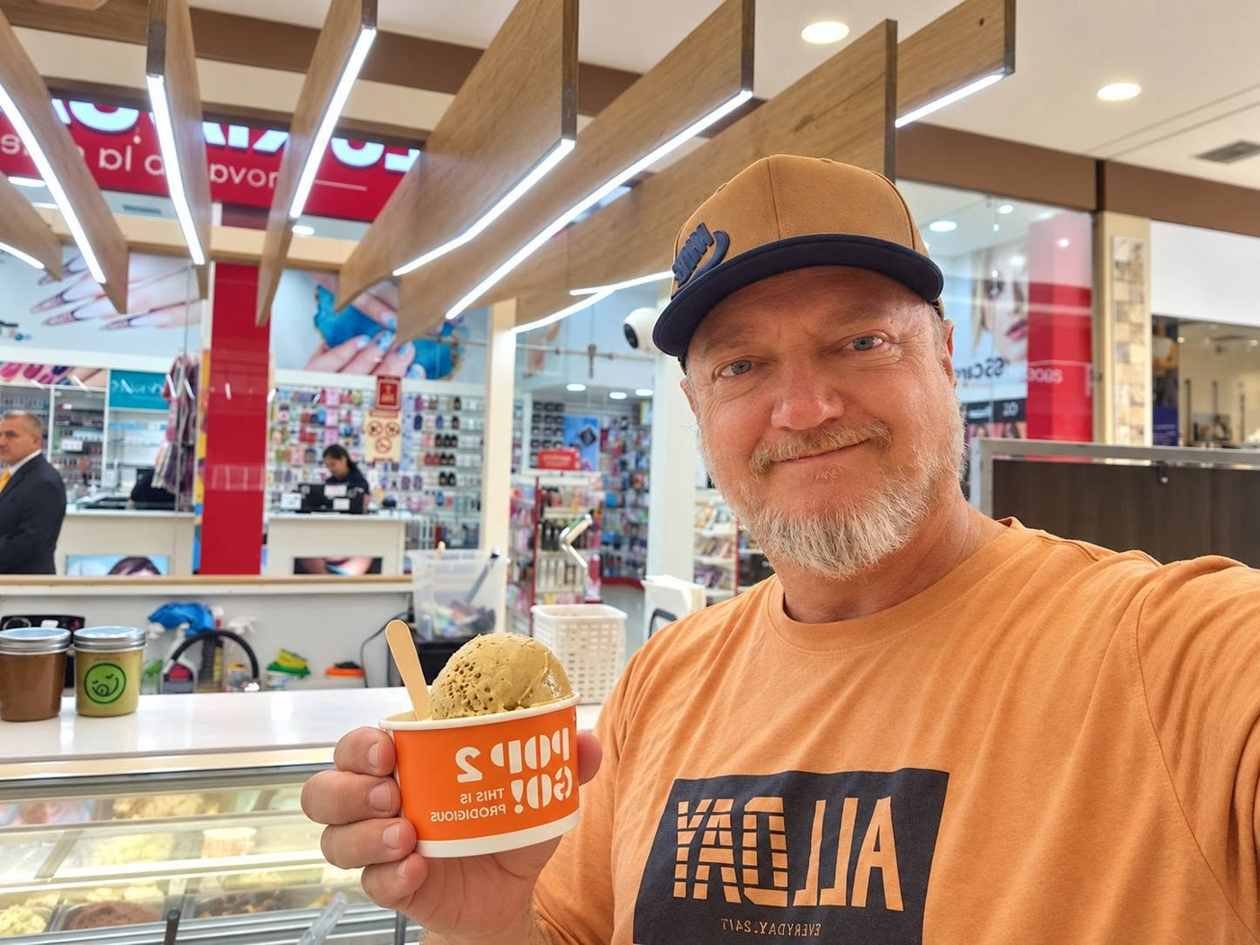
There is also a connection close to home: we have a Pop2Go at the Paseo Shopping in Bahía de Caráquez. We can support a Manabí brand without leaving our own canton.
Manabí Can Do More With What It Already Produces
Marco Andrade’s award deserves congratulations. It also deserves our attention.
We need to value the work of producers and create conditions that help more entrepreneurs turn local ingredients into sustainable businesses.
For me, that is the most important lesson here. Economic development can begin with something we already have, when someone finds a new way to develop it and bring it to market.
Congratulations to Marco Andrade, the Pop2Go team, and the producers whose ingredients make these products possible.
Sometimes, a single spoonful of gelato can show us what is possible for rural Manabí.
What product from your community could we develop and bring to new markets? Share your idea in the comments.
— Carter · El Gringo