

One festival. More than 9,000 visitors. Over $100,000 in economic activity for a small coastal community in Manabí, Ecuador.
The seventh Ligüiqui Octopus Festival offers an example of how a well-organized festival in Ecuador can support local businesses, attract tourists, and create economic opportunities for an entire community. According to published figures, the event welcomed more than 9,000 visitors and generated over $100,000 in economic activity.
This is exactly the kind of initiative that other communities in Manabí should study.
How a Festival in Ecuador Generated Over $100,000
According to the published figures, the seventh Ligüiqui Octopus Festival attracted more than 9,000 visitors and generated over $100,000 in local economic activity.
That represents an average of more than $11 in economic activity per visitor. The money circulated through food stalls, fishing businesses, local entrepreneurs, transportation services, and other small businesses.
The festival demonstrates how local food and cultural traditions can become valuable tourism assets. Rather than simply organizing an event for entertainment, a community can use its identity to attract visitors and encourage spending that benefits local residents.
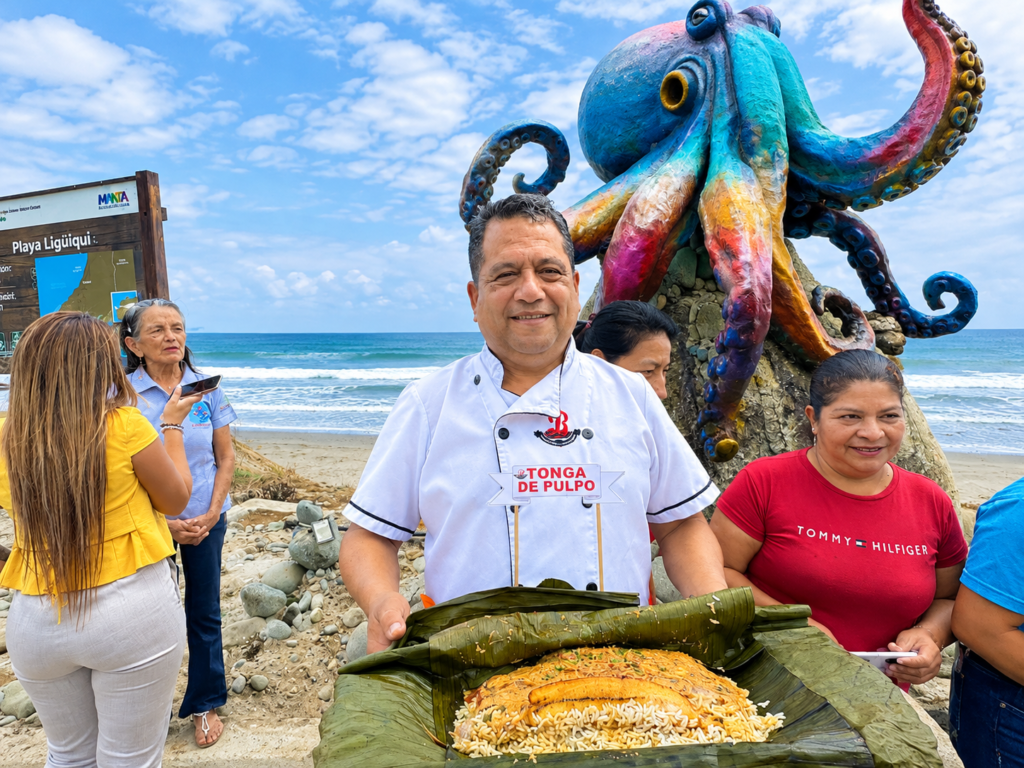
Where Is Ligüiqui, the Community Behind the Festival?
Ligüiqui is a small coastal community in the rural parish of San Lorenzo, within Manta Canton, Manabí Province. It is located approximately 30 kilometers south of Manta along the Ruta del Sol coastal route.
Quito, Guayaquil, and the urban center of Manta did not generate this economic activity. A small coastal community generated this economic activity and turned the rock octopus into a gastronomic, cultural, and tourism attraction.
That is the important lesson: a successful festival in Ecuador can turn a local tradition into an opportunity for economic development.
What Makes a Successful Festival in Ecuador?
A festival should be more than public spending on a stage, musical performances, and temporary entertainment. While these elements can attract people, the event should also create tangible economic opportunities for the community hosting it.
A well-planned festival can bring visitors to a destination, increase demand for local products, support small businesses, and encourage tourists to discover nearby attractions. When organizers base an event on something authentic to the area, it preserves local traditions and strengthens the community’s identity.
Policy makers should plan festivals as economic development projects, with clear objectives and measurable results.
Manabí Has the Potential to Create More Successful Festivals
The experience in Ligüiqui raises an important question: what could other communities in Manabí achieve by promoting their own food, traditions, and local products?
The province already has a wide range of cultural and gastronomic resources that could inspire new events.
Seafood Festivals in Bahía de Caráquez, San Clemente, and San Jacinto
Fishing and seafood are an essential part of the coastal identity of these communities. Events celebrating local seafood could attract visitors interested in fresh fish, traditional recipes, and the region’s fishing culture.
With appropriate planning and promotion, these events could create opportunities for fishermen, restaurants, food vendors, and other local businesses.
Agricultural and Cocoa Festivals in Rural Manabí
Cocoa and other agricultural products could serve as the foundation for festivals that connect rural producers with consumers and visitors. These events could showcase local products, traditional production methods, regional cuisine, and the people behind the agricultural economy.
Traditional Food Festivals in Charapotó and San Isidro
Manabí’s culinary traditions are another opportunity for tourism development. Festivals celebrating traditional dishes and local ingredients could help attract visitors while promoting restaurants, family businesses, and regional food producers.
Festivals Celebrating Fishing Culture, History, and Coastal Traditions
Beyond food, Manabí has beaches, fishing traditions, local history, and coastal customs that could become the focus of annual cultural events. These celebrations could encourage visitors to explore destinations beyond the province’s best-known tourist areas.
The goal would not be to organize more festivals simply for the sake of having them. It would be to develop distinctive events that give people a reason to visit, stay longer, and spend money within the local economy.
How Should We Measure the Economic Impact of a Festival?
Every festival in Ecuador designed to support local development should have clear objectives and a way to evaluate its results.
Attendance figures are important, but they do not tell the whole story. An event can attract thousands of people without generating the expected benefits for local residents.
To understand whether a festival is truly contributing to economic development, organizers should measure:
- Visitor attendance: How many people attended, and where did they come from?
- Visitor spending: How much money did visitors spend on food, accommodation, transportation, and local products?
- Local business participation: How many local businesses, vendors, fishermen, and producers benefited?
- Hotel occupancy: How many rooms were occupied during the event?
- Employment: How many temporary or permanent jobs did the organization create?
- Repeat visits: How many visitors returned to the destination after the festival?
Gathering this information would help us evaluate each event, identify opportunities for improvement, and decide whether future editions should be expanded or adjusted.
It would also help local authorities understand how public investment in festivals translates into economic benefits for residents.
What Could Sucre Canton Achieve With Better Tourism Planning?
The Ligüiqui Octopus Festival provides a useful example for Sucre Canton, where Bahía de Caráquez, San Clemente, San Jacinto, Charapotó, and San Isidro each have distinctive attractions, products, and traditions.
With coordinated planning, these communities could develop annual festivals that complement one another rather than compete for the same visitors. A regional calendar of events, consistent promotion, and cooperation among local businesses could encourage tourists to explore multiple destinations.
Tour operators could encourage visitors to attend a seafood festival, discover traditional Manabí cuisine, explore local agricultural products, or learn about the area’s fishing heritage. Connecting these experiences could help distribute tourism spending across different communities.
However, the success of such initiatives would depend on organization, effective promotion, participation from local businesses, and the ability to measure results. We should not treat the festival as successful merely because it attracts a large crowd. We should evaluate the festival’s long-term value by the opportunities it creates for local residents.
A Festival Can Become an Investment in the Local Economy
Ligüiqui has demonstrated how a small coastal community can attract thousands of visitors and generate substantial economic activity by building an event around something authentic to its identity.
If the published figures are accurate, the seventh Octopus Festival offers a valuable example of how gastronomy, culture, and tourism can work together to support local businesses.
So, if Ligüiqui can generate more than $100,000 in economic activity through an Octopus Festival, what could Bahía de Caráquez, San Clemente, San Jacinto, Charapotó, and San Isidro achieve with effective planning and promotion?
Manabí already has the food. It has the culture. It has the destinations.
We must organize, promote strategically, collaborate with local businesses, and achieve measurable results.